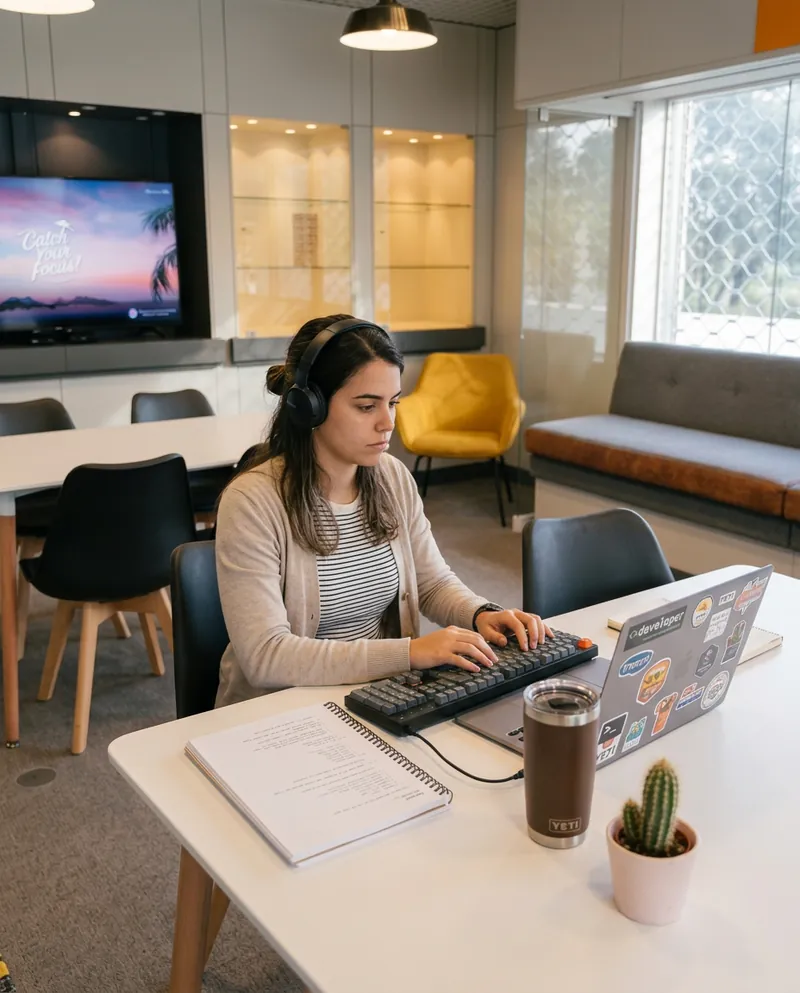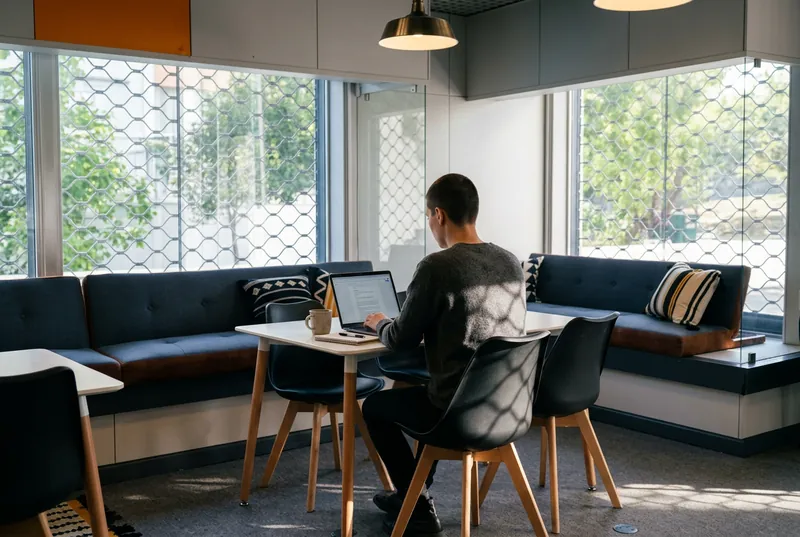

You can feel a good workspace in the first minute. The light is right, the noise is under control, and nothing is shouting for your attention. Ask any designer in the building: design is not decoration. It decides how easy it is to start work, to keep going and to stop. Here is how we think about it at 10cowork, and how you can borrow the same ideas for your own desk.
011 / 7Light comes first, and direction beats brightness
Daylight is the cheapest upgrade a workspace can have. Many people find they feel more alert and less drained in a bright room than in a windowless one. Desks near windows, glass partitions that let light travel, and as little heavy curtain as possible all help.
Direction matters as much as quantity. Light from the side is kind to your eyes and your screen. A window directly behind the monitor makes you squint, and one directly behind you puts glare on the screen and turns you into a silhouette on video calls.
022 / 7One warm accent colour beats a rainbow
Our brand yellow is not an accident. A single warm accent against calm neutrals gives the eye a point of energy without turning the room into a beach bar at closing time. Use colour for the things you want people to notice, and keep everything else quiet.
A room that tires you
- Harsh overhead light
- Five competing colours
- Everything in one open noise
- Clutter on every surface
A room that helps
- Daylight and soft lamps
- Calm base, one warm accent
- Quiet zones and social zones
- Clear desks, easy storage

033 / 7Noise: the design problem you cannot see
Most open offices fail on sound, not looks. The problem is rarely loud noise. It is speech you can half understand, because the brain keeps trying to follow it. One person on a call two desks away can cost a room more focus than a busy road outside.
- Give calls a dedicated place, like a phone booth, so speech leaves the desk area.
- Use soft surfaces: rugs, upholstered chairs and curtains absorb echo.
- Put the kitchen and lounge at a distance from the quiet desks.
- Agree simple house rules, such as headphones on means do not disturb. Our coworking etiquette guide has more.
A good workspace does not demand your attention. It hands it back, with interest.
044 / 7Zones for different kinds of work
Quiet desks
For deep, focused work. Low noise, few interruptions.
Phone booths
So calls never disturb a neighbour, and a neighbour never ends your call.
Social space
A kitchen and lounge where conversation is welcome and breaks feel like breaks.
A private room
The War Room for meetings, sprints and anything confidential.
055 / 7Set up your own desk in five minutes
Turn to the light
Sit so the window is beside you, not in front or behind. Move the desk if you are allowed to.
Raise the screen
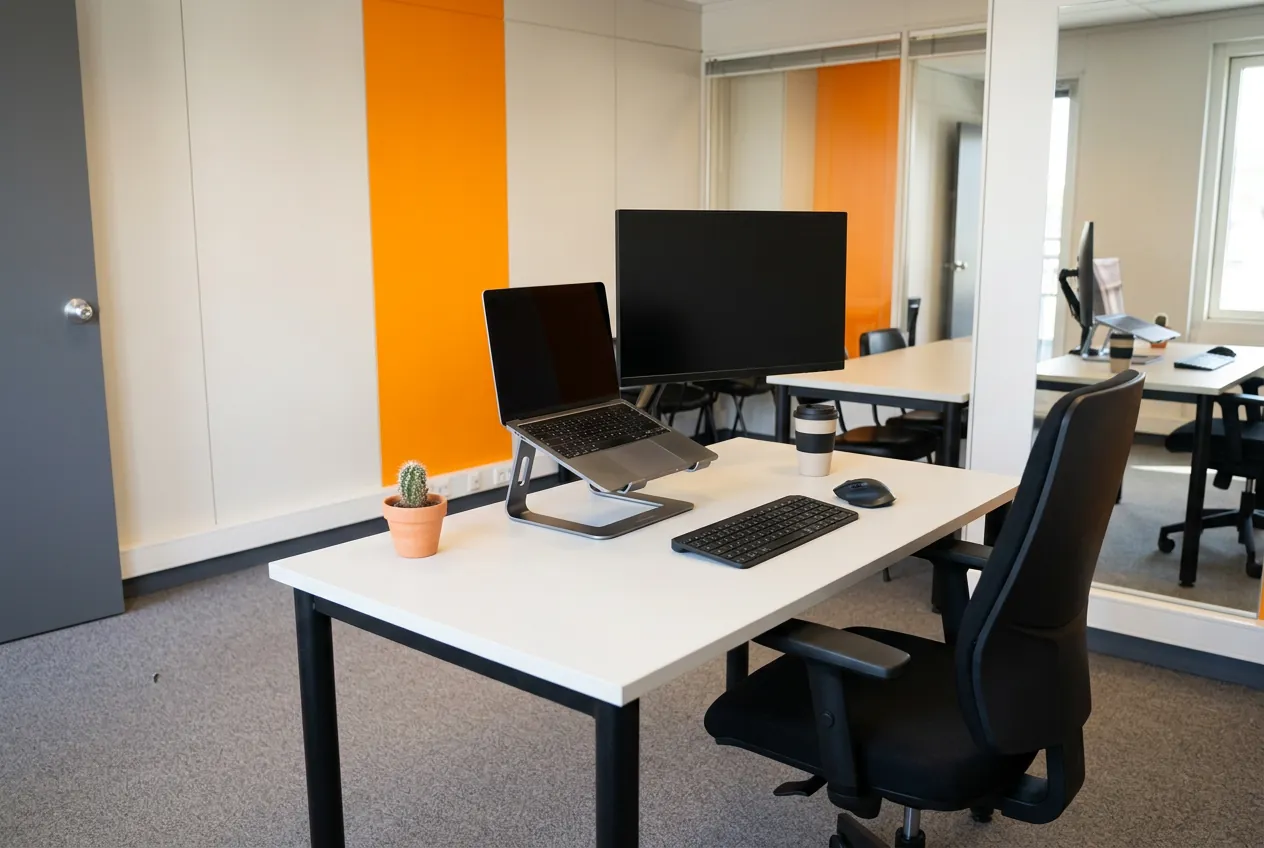
The top of the screen should sit at about eye level. A laptop stand or a pile of books does the job.
Clear the surface
Keep only what today's task needs. Everything else goes in a bag or a drawer.
Plan your sound
Decide where calls will happen before the first one rings, and keep headphones within reach.
Add one thing you like
A plant, a good mug, a notebook in a colour you enjoy. One, not ten.
066 / 7Plants, texture and a little glass
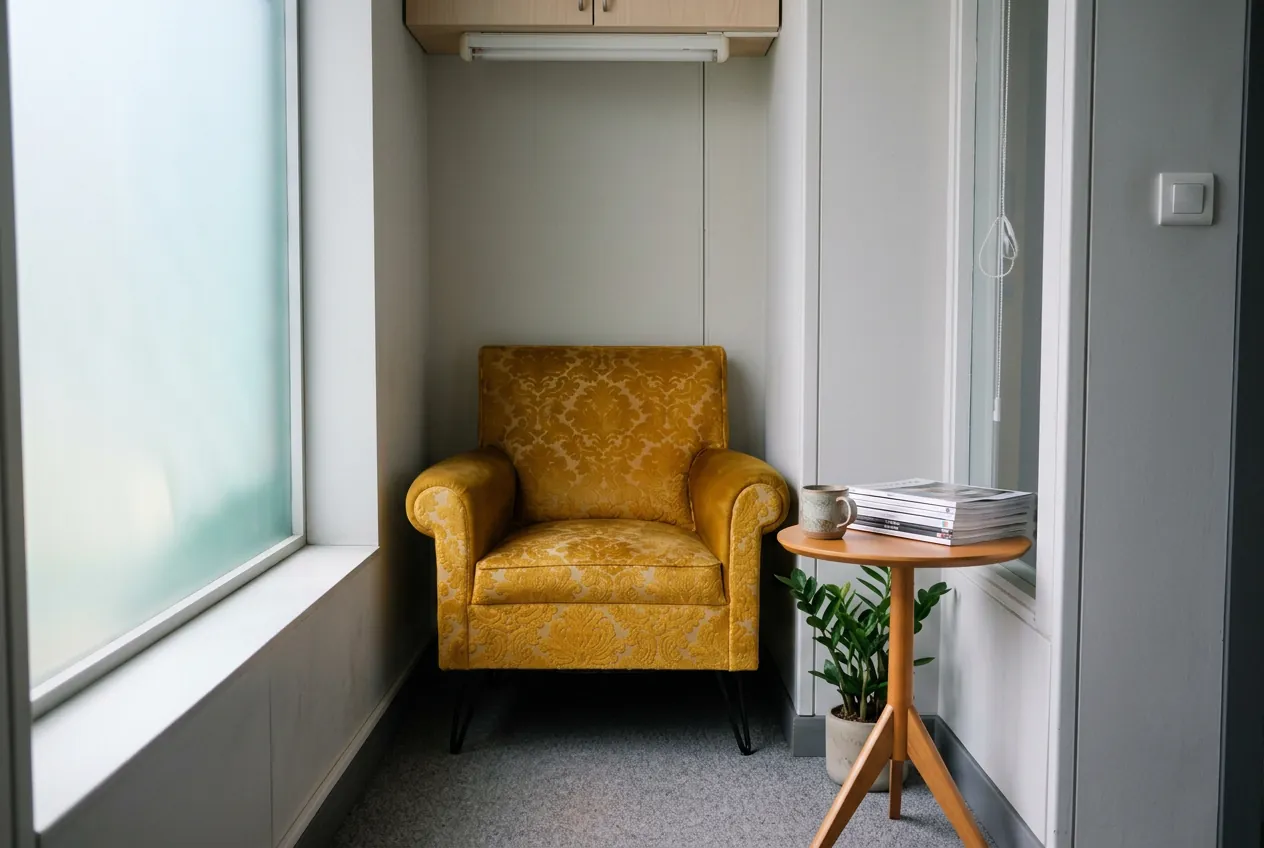
Soft materials, natural textures and a few plants take the edge off a room full of screens. Glass adds depth and light without closing a room off. None of these is expensive. All of them make a place feel cared for, which is how people treat it in return.
If you notice the design, it is not working yet. If you notice the work, it is.
077 / 7Our verdict: fix light, sound and clutter, at work and at home
Our view is simple: style is optional, control is not. Get the light from the side, move speech away from desks and clear the surface, and almost any room improves, no interior architect required. Working from home is harder to design because the kitchen table was never meant to be a desk. The same rules apply: side light, one quiet corner for focus, a separate place for calls and a way to leave work at the end of the day. Our comparison of coworking and working from home looks at when home works and when it does not, and our tips to stay productive working remotely cover the habits that go with the space.
Light, calm and a warm yellow, done the South Bay way. Come and work in it for half a day, free, and see the space we are readying for 10cowork v2.0 in 2027.
Book a free half day4 questionsFrequently asked questions
What makes a good coworking space design?
Natural light, a calm base palette with one warm accent, clear zones for quiet work, calls and socialising, and comfortable furniture. Good design makes it easy to start, continue and finish work.
Does workspace design affect productivity?
It can. Light, noise and layout influence mood and focus. Spaces that separate quiet and social areas and make good use of daylight tend to feel easier to work in.
What colour is best for an office to help focus?
A calm, neutral base with one warm accent colour tends to work well. Too many strong colours compete for attention.
How can I reduce noise in an open workspace?
Move calls to a phone booth, add soft surfaces that absorb echo and keep social areas away from quiet desks. Clear house rules help as much as furniture.