


Working from home looks unbeatable on paper. No rent, no travel, no dress code. The kitchen table is a fine place for breakfast; as an office, it has issues. Yet many remote workers who start at the kitchen table end up paying for a coworking desk within a year. Here is an honest look at both, and what we would do.
011 / 7Home against coworking, side by side
Working from home
- Free and instant
- Familiar, comfortable, flexible
- Distractions: laundry, deliveries, family
- Calls with a washing machine for company
- Work and life blur together
Coworking
- From €10 a day, no contract
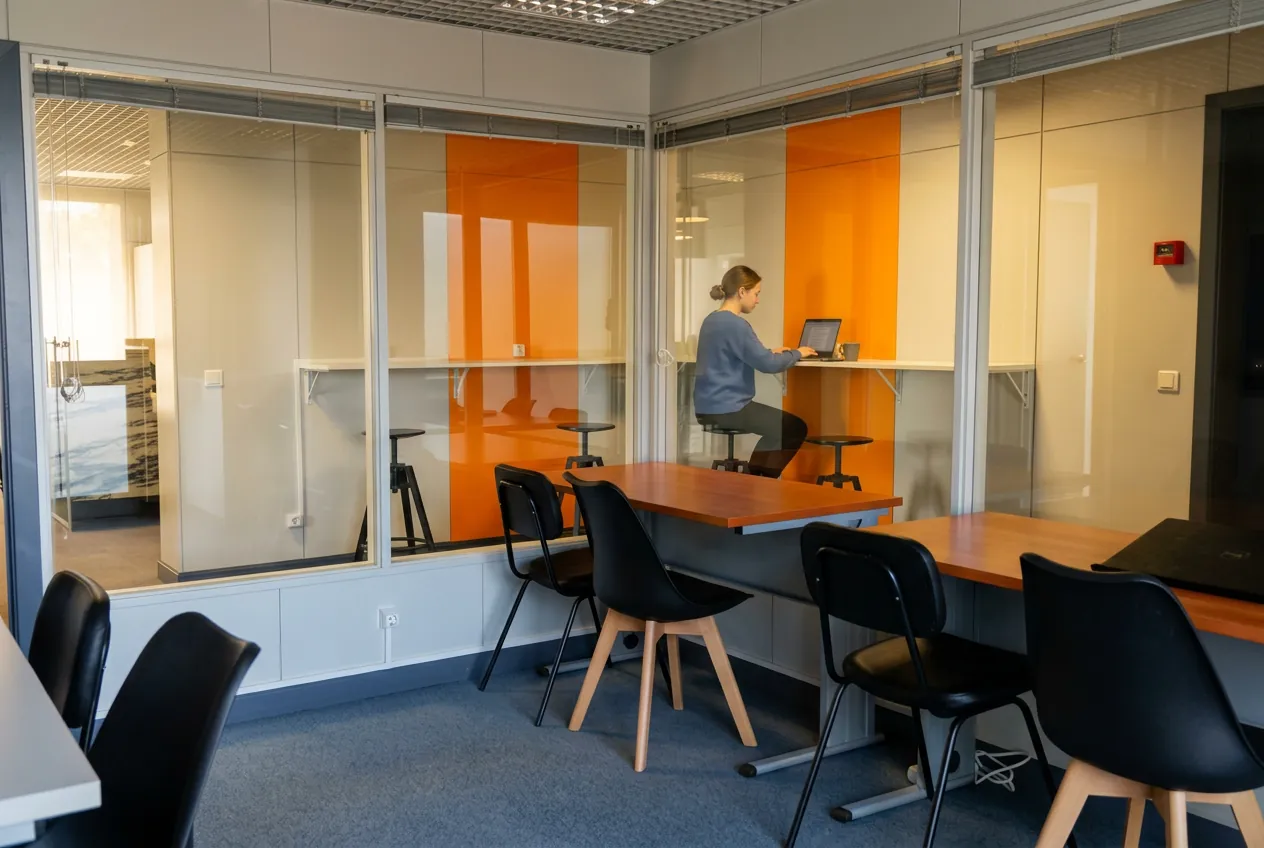
- A desk, Wi-Fi and a booth, ready
- People to talk to and learn from
- A meeting room when you need one
- A clear start and end to the day
022 / 7Where home genuinely wins
- Cost: nothing beats a desk you already own.
- Flexibility: start at 7:00, break at 15:00, no one minds.
- Deep, solitary tasks: some days you just want the door closed and the house quiet.
033 / 7The hidden costs of working from home
Home is free only if you ignore what it quietly costs. None of these items show up on an invoice, which is exactly why they get ignored.
- Heating and power: a home office in a Portuguese winter means heating a room all day. Many homes here were not built for it.
- Kit: a proper chair, a second screen and a decent light. Sofas and dining chairs are not ergonomic, whatever they promise.
- Calls: a barking dog or a delivery at the door during a client call costs more than a day pass.
- Isolation: weeks without a casual conversation wear down motivation slowly, and you notice late.
If you stay home, set it up properly. Our tips to stay productive working remotely help whichever way you go.

044 / 7Where coworking wins
- Focus: a place that means work helps the brain switch on, and off when you leave.
- Professionalism: a meeting room, a real address and calls without background chaos.
- People: hackers, hipsters and hustlers, and the ideas, clients and friendships that never knock at your front door.
- Routine: a reason to get dressed, leave the house and keep a rhythm.
Home saves the commute. The washing machine still makes a terrible colleague.
055 / 7A quick test: which one do you need?
You probably need a coworking desk, at least part of the week, if two or more of these sound familiar.
- You apologise for background noise on calls more than once a week.
- You work later than you used to because the day never really ends.
- You meet clients in cafés and wish you did not.
- You have not had a work conversation in person for a fortnight.
- Your best ideas used to come from chatting to people, and now they do not come.
066 / 7The split week we recommend
Pick two anchor days
Choose the days with the most calls or the hardest thinking, and make them coworking days every week.
Do the maths
Two days a week is about eight or nine days a month: €80 to €90 in day passes. At ten days, the €100 month pass is cheaper and adds 24/7 access.
Move calls out of the house
Schedule video calls for your coworking days and take them from the phone booth. Here is how to make video calls from a coworking space sound professional.
Review after a month
Did you get more done on coworking days? Add a third day, or drop to one. The passes have no contract, so adjusting is free.
077 / 7Our verdict: split the week
You do not have to pick one for ever, and we think you should not. Home is fine for quiet days. Coworking two or three days a week gives you focus, meetings and company for less than most people spend on lunches out. Living in Margem Sul makes it easier still: your desk can be closer than the nearest bridge queue, as we explain in skip the bridge.
Home is for living. Your work deserves its own address, ideally near a beach.
See how it feels. Your first morning or afternoon is free, no card needed.
Try a free half day5 questionsFrequently asked questions
Is coworking worth it if I can work from home?
For many people, yes. If you struggle to separate work from home, miss colleagues, or need a place to meet clients, a coworking desk costs less than the focus and opportunities you lose without one. A €10 day pass lets you test it.
Is working from home or coworking more productive?
It depends on the task. Home suits quiet solo work, while coworking usually helps with focus, calls and routine. Many people find a mix of both is the most productive.
How often should I go to a coworking space?
Two or three days a week is a common balance for hybrid workers. Start with a week pass and adjust.
How much does coworking cost compared with working from home?
At 10cowork, €10 a day or €100 a month plus VAT. Home has no rent, but heating, equipment and lost focus are real costs too.
Can I use coworking just for meetings?
Yes. You can book the War Room by the hour, or for the full day, without a desk pass.