


Many remote employees would work better outside the home but assume the cost is theirs, and quietly pay for it in patience. Often a short, clear request is enough. Here is how to make the case without sounding like you are asking for a beanbag and a kombucha tap.
011 / 7The problem: remote staff quietly pay for the missing office
When a company goes remote, it saves on rent, desks and coffee. Those costs do not disappear; they move to your kitchen table, your electricity bill and your patience during calls with a neighbour drilling next door.
We think it is fair, and smart, for employers to cover a desk when home does not work. Asking for it is a business conversation, not a favour.
022 / 7The numbers make most of the case for you
€100
month pass, plus VAT (€123 with VAT)
€3.30
about per day over a 30-day month
€10
day pass, plus VAT
€40
week pass, plus VAT
Put that next to a monthly salary and the request looks small. No contract, no deposit and no notice period means the company can stop at any time, which removes most of the risk from saying yes.

033 / 7Build the request in four lines
State the problem
Home is making it harder to focus, take calls or keep a routine. Give one concrete example.
Offer the solution
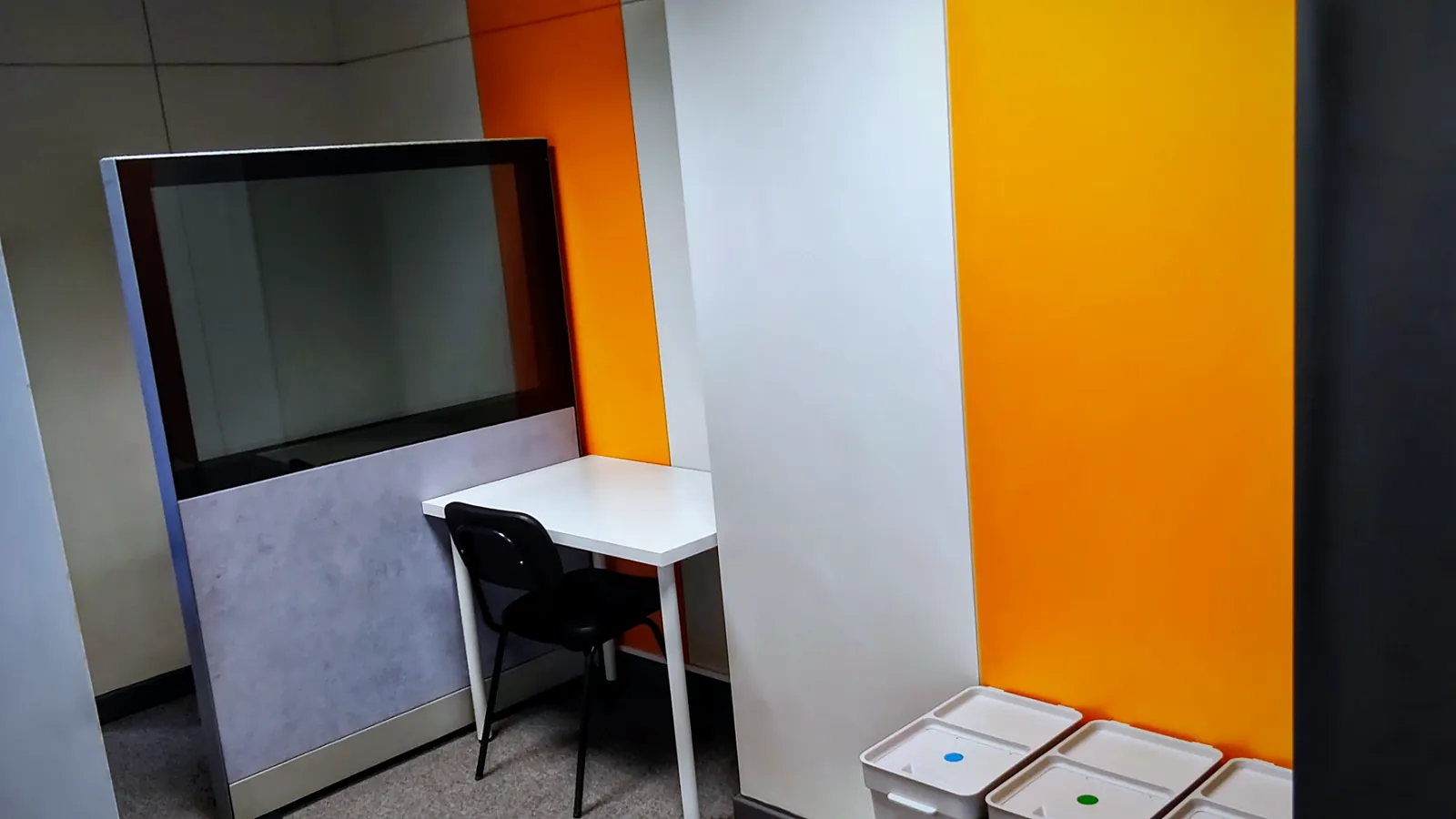
A desk at a coworking space with fibre Wi-Fi, a phone booth and a meeting room.
Name the cost
A month pass is €100 plus VAT, about €3.30 a day. Ten day passes cost the same.
Propose a trial
One month, then review: focus, call quality, delivery.
You are not asking for a perk. You are proposing a cheaper way to get better work.
044 / 7Pick the pass that matches how you actually work
- One or two days a week. Day passes at €10 each, roughly €40 to €90 a month.
- Three or more days a week. The month pass at €100, with 24/7 access and your own door code.
- A project crunch or a busy fortnight. The 2-week pass at €70 or the week pass at €40.
055 / 7Answering the usual objections
What they may say
- "If we pay for you, everyone will want it."
- "How do we know you will use it?"
- "Is it secure enough for client work?"
What you can answer
- "Make it a simple policy with a monthly cap."
- "Check-ins and a review after four weeks."
- "Private calls go to the booth or meeting room."
066 / 7How to measure the trial
- Note how many deep work hours you get per week, before and during the trial.
- Track dropped or noisy calls; they usually fall to zero.
- List what you delivered, and whether anything shipped earlier than planned.
- Share a five-line summary at the end of the month.
Bring numbers, a trial and an exit. Then saying yes is the easy option.
077 / 7Our verdict
Ask, and ask properly: a clear problem, a small fixed cost, a one-month trial and a review date. At this price, the request is easier to approve than most managers expect. Most of them have signed off bigger sums for worse ideas. If you are self-employed, read monthly pass or day passes. For teams, see hybrid work for small teams, and for calls, video calls from a coworking space.
Try the space first. Your first half day is free.
Book a free half day5 questionsFrequently asked questions
Can my employer pay for coworking?
Many employers do, especially for remote staff. Make a short case around focus, reliability and cost, and propose a one-month trial.
How much does a month of coworking cost at 10cowork?
A month pass is €100 plus VAT, about €3.30 a day, with 24/7 access, your own door code and no contract.
How do I ask my boss to pay for a coworking space?
Send a short message with the problem, the solution, the cost and a one-month trial with a review date. Keep it to five sentences.
Is a month pass or day passes better for a remote employee?
If you will use the desk about ten days a month or more, the month pass. Fewer days, day passes at €10 plus VAT each.
Does my employer have to sign a contract for coworking?
Not at 10cowork. There are no contracts: passes run by the day, week or month, so the company can stop whenever it likes.