


Hybrid work works when the rules are simple, and falls apart when they are merely polite. For a small team the question is usually how many days to meet and what those days are for. Here is a policy you can adapt in an afternoon, ideally before anyone starts a group chat about it.
011 / 7The problem: "come in when it makes sense" means nobody comes in
Many small teams start hybrid with good intentions and no rules. Within a month, people come in on different days, sit alone with headphones and wonder why they bothered. The office becomes a quieter version of home.
The fix is not more days together. It is the same days, for clear reasons, every week.
Hybrid fails on vague rules, not on distance. Even a river is easier to cross than a muddled calendar.
022 / 7A simple hybrid policy in five steps
Pick shared days
One or two fixed days a week when everyone meets. Predictable beats flexible.
Decide what the days are for
Planning, reviews, decisions, onboarding and anything that needs a whiteboard.
Protect focus days
On the other days, keep meetings to a minimum.
Choose the place
A coworking meeting room for shared days, and desks for those who want one on the others.
Review every quarter
Ask what works, change one thing, keep it simple.
033 / 7Which days work best, and what to do on them
A shared day should feel worth the trip. If people spend it on solo work they could have done at home, the policy loses credibility fast. Plan it like a small event, with a rough shape.
- Morning. A short review of last week and the plan for this one, then the hardest group problem while energy is high.
- Lunch. Together, away from the table. This is where a lot of the real alignment happens.
- Afternoon. One-to-ones, pairing, onboarding and decisions that need a whiteboard.
- End of day. Five minutes on who owns what until the next shared day.
044 / 7The cost case: flexible beats a lease for small teams
Office lease
- Long contract and deposit
- Pay for empty desks four days a week
- Furniture and set-up
- Hard to change when the team grows or shrinks
Flexible coworking
- Pay by the day, week or month
- Meeting room only when needed
- Furnished and ready
- Change every month, no contract
A worked example: a team of five meeting one day a week in the War Room at the €50 day rate spends around €200 to €250 a month, plus VAT. Add a €100 month pass for anyone who wants a desk on the other days. That is typically a fraction of a small office lease, before you count furniture and utilities.

055 / 7Write it down: the one-page policy
- Shared days. Which days, which hours, and where.
- Purpose. What those days are for, in one line.
- Focus days. Meeting-light by default, with response times for chat and email.
- Costs. What the company pays for: room, passes, travel.
- Exceptions. How to swap a day when life gets in the way.
- Review. The date of the next quarterly check.
066 / 7Common mistakes to avoid
- Letting each person choose their own office days, so the team never overlaps.
- Filling the shared day with video calls to people who stayed home.
- Keeping the policy in someone's head instead of on paper.
- Never reviewing it, so small annoyances become reasons to quit.
Same days, clear purpose, written down. That is the whole policy.
077 / 7Our verdict
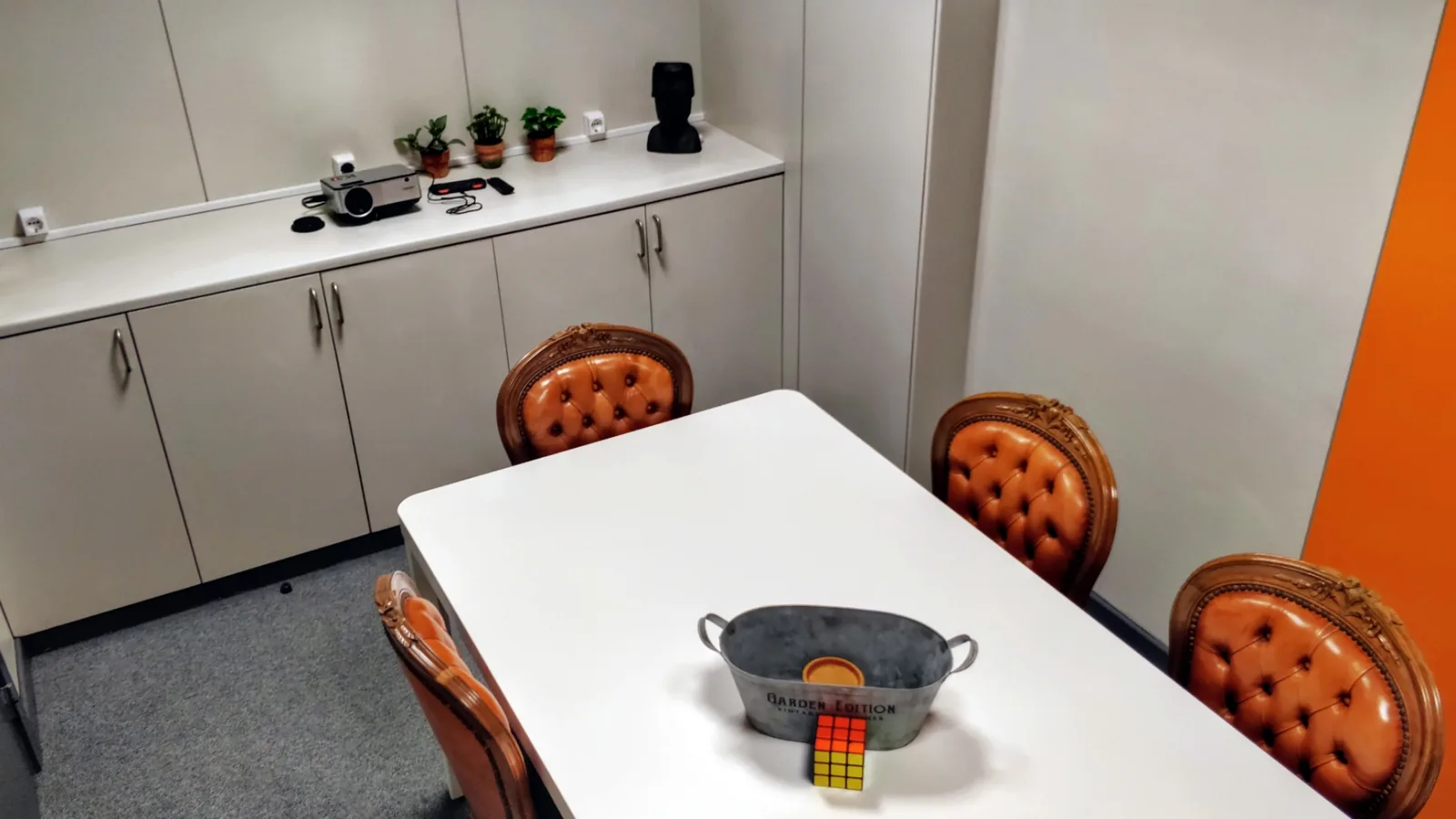
For a small team, pick one or two fixed mid-week days, write the rules on one page and rent the room only when you meet. Hackers, hipsters and hustlers on the same team all need the same thing: a day they can count on. At 10cowork the War Room seats six at €10 an hour or €50 a day, and a desk is €100 a month, plus VAT. Read office space for small teams south of Lisbon and workshops and training space. Staff who want a desk on other days can ask their employer to pay for coworking.
Try a shared team day in the War Room.
Book the War Room5 questionsFrequently asked questions
How many days should a hybrid team be together?
For a small team, one or two fixed shared days a week is a good start. Review it every quarter.
Is coworking good for hybrid teams?
Yes. Flexible desks and a meeting room let you pay only for the days and hours you use.
What should a hybrid work policy include?
The shared days, what they are for, rules for focus days, what the company pays for, how to handle exceptions and a review date. One page is enough.
Which day of the week is best for a team office day?
Usually Tuesday, Wednesday or Thursday. Mondays tend to fill with admin and Fridays are the easiest to cancel.
How much does a hybrid team day cost at 10cowork?
The War Room seats six and costs €50 a day or €10 an hour, plus VAT, with coffee, Wi-Fi and free parking included.