
Remote work is freedom, and also the easiest way to spend a Tuesday reorganising the spice rack. The good news is that a few simple habits fix most of it. Here is a routine that works for freelancers, founders and remote employees.
011 / 8The problem: remote days have no edges
An office day starts when you walk in and ends when you leave. At home, nothing marks either end, so the morning dissolves into email and the evening into one more task. Most productivity advice tries to fix the middle. We think the edges are the real problem.
Productivity is a place problem before it is a willpower problem. The sofa always wins.
022 / 8The routine we recommend, in six steps
Fix your start and end
Begin at the same time every day and stop at a set time. The edges matter more than the middle.
Pick three outcomes
Write the three things that would make today a good day. Do the hardest first, before email gets a vote.
Block deep work
Two or three blocks of 60 to 90 minutes, phone away, notifications off.
Batch the small stuff
Emails and messages at set times, for example 10:30, 13:30 and 16:30, not all day.
Take real breaks
Step outside, walk, eat away from the screen. A short walk resets focus.
Change the place
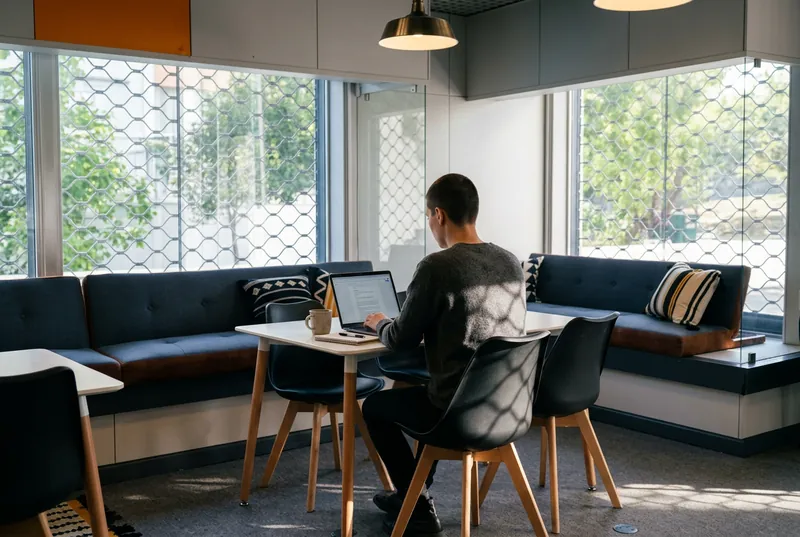
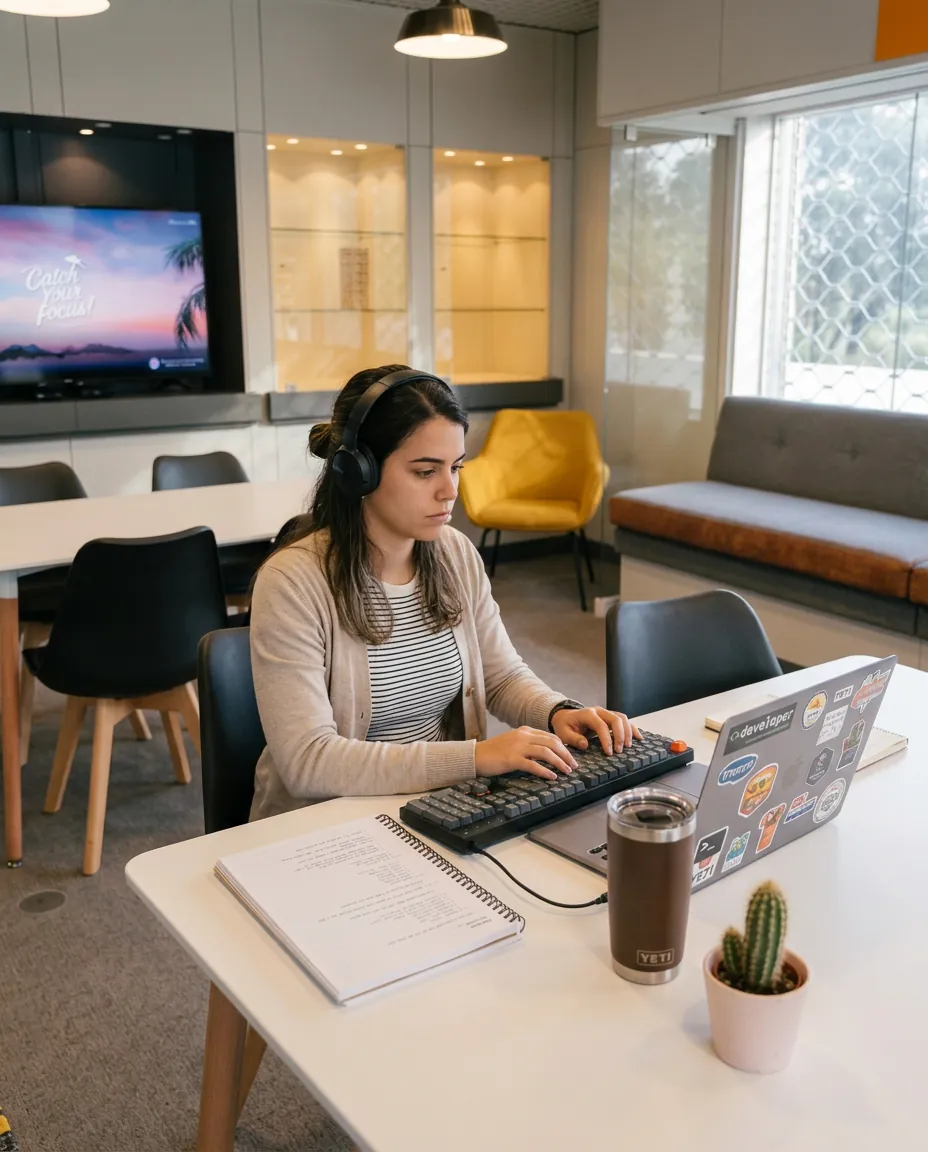
Work somewhere that is for working. A desk outside the home keeps work and rest apart.

033 / 8A sample day that actually fits
Routines fail when they look good on paper and ignore real life. Here is a template for a day at a desk outside home. Move the times to suit school runs or clients abroad; keep the shape.
- 8:30 to 9:00. Arrive, make a coffee, write your three outcomes before opening email.
- 9:00 to 10:30. Deep work block one, on the hardest task of the day.
- 10:30 to 11:00. Messages, quick replies and a short walk.
- 11:00 to 12:30. Deep work block two, or calls if your clients sit in another time zone.
- 12:30 to 13:30. Lunch away from the screen, outside if the weather allows.
- 13:30 to 15:30. Meetings, admin and shallow work, batched together.
- 15:30 to 17:00. Block three if you still have energy, otherwise planning and loose ends.
- 17:00 to 17:15. Write tomorrow's first task and close the laptop.
044 / 8Deep work only survives if you defend it
Switching tasks has a cost. Each time a message pulls you away, it typically takes a while to get back to full concentration, and the half-finished thought rarely returns as good as it was.
So the rule is simple: during a block, nothing comes in. Phone in a bag, chat apps closed, email closed. If someone truly needs you, they will call twice.
Your calendar shows your meetings. It should also show the work that pays for them.
055 / 8The evidence is in your habits, not your app
Habits that drain the day
- Checking email first thing
- Working from the sofa or the bed
- Notifications on during focus time
- No clear finish, so work leaks into the evening
- Lunch at the keyboard
Habits that hold up
- Three outcomes written before email
- A desk that is only for work
- Do not disturb mode during blocks
- A fixed stop time and a short shutdown
- A real lunch break, ideally outside

066 / 8Why we think the place beats any productivity app
- Fewer interruptions from home life: no laundry, no doorbell, no fridge.
- A clear line between work and rest. The commute, even a short one, is that line.
- People around you, which makes starting easier on slow mornings.
- A meeting room or phone booth when you need privacy for a call.
077 / 8How to act: plan the week, not only the day
Daily routines work better inside a weekly plan. On Friday afternoon, spend 20 minutes on next week: deadlines, calls, and the two or three bigger pieces of work that matter most.
- Pick the week's single most important outcome and put it on Monday or Tuesday morning.
- Group calls onto one or two afternoons so the other days stay open.
- Decide which days you work from home and which from a desk outside.
- Leave one block free on Friday for whatever slipped.
088 / 8Our verdict
Fix the start and the stop, defend two deep work blocks, and get out of the house on the days that matter. Apps and timers help at the margin; a fixed routine in a place built for work does the heavy lifting. On the south bank, the work day can even end at the beach.
If you work from home most days, read coworking versus working from home. Our space is designed for focus, as we explain in workspace design: focus, light and colour. If short days hit your motivation, see remote work in Portugal in winter.
Try the space first. Your first half day is free.
Book a free half day4 questionsFrequently asked questions
How do I stay productive working from home?
Fix a start and end time, pick three outcomes, protect deep work blocks, batch small tasks, take real breaks and work in a place that is for working.
How long should a deep work block be?
Most people do well with 60 to 90 minutes. If you are out of practice, start with 45 minutes and build up; two or three blocks a day is a realistic target.
What is the best daily routine for remote workers?
One with a fixed start and end, the hardest task first, messages batched at set times and a real lunch break. The exact hours matter less than keeping them consistent.
How do I stop working late when I work remotely?
Set a stop time, write tomorrow's first task, then close the laptop and leave the work area. Working outside the home turns the end of the day into a physical act, which helps.