

Portugal is one of the most popular countries in Europe for remote workers, and for once the brochures are not exaggerating. Most people ask about the visa first. This guide explains the idea in plain terms, points you to the official sources because the details change, and covers the part we do know well: where to work once you land.
011 / 6The visa is a paperwork question with official answers
Portugal offers a visa route for people who work remotely for employers or clients outside Portugal. It is commonly called the digital nomad visa and is linked to the D8 category. You generally need to show remote income, accommodation, health cover and other documents. Do not rely on any single blog post for the numbers: confirm them on the official pages.
022 / 6Take the facts only from official sources
- The official visa portal of the Portuguese Ministry of Foreign Affairs, for categories and documents.
- Your nearest Portuguese consulate, which handles the application from abroad.
- AIMA, the Portuguese agency for migration, for residence once you are in the country.
- Portal das Finanças, the tax authority, for your NIF and tax questions.
- A qualified lawyer or adviser if your case is anything other than simple.

033 / 6Doing things in the right order saves weeks
Read the official requirements
Start with the government and your nearest Portuguese consulate.
Prepare your documents
Income proof, contracts, accommodation, health cover and a clean record, as required.
Plan your first month
Choose where to live and where to work before you land.
Get a NIF and set up the basics
You will need a Portuguese tax number for many things. Non-residents may need a tax representative, so check the Finanças rules.
Find a workspace and a routine
A desk away from your accommodation makes the first weeks easier.
044 / 6The first month is where most plans wobble
€40
week pass to land and settle in, plus VAT
€100
month pass with 24/7 access, plus VAT
0
contracts to sign
Most people underestimate how much admin the first month brings. Appointments, flat viewings and a new SIM card eat into working hours. Start with a week pass, find your rhythm, then move to a month pass when the routine is set.
Get the visa from the official sources. Get the routine from a desk.
055 / 6Time zones make 24/7 access worth having
Mainland Portugal shares a time zone with the UK and is typically five hours ahead of New York. That puts American calls in your afternoon and evening, and Asian calls early in the morning.
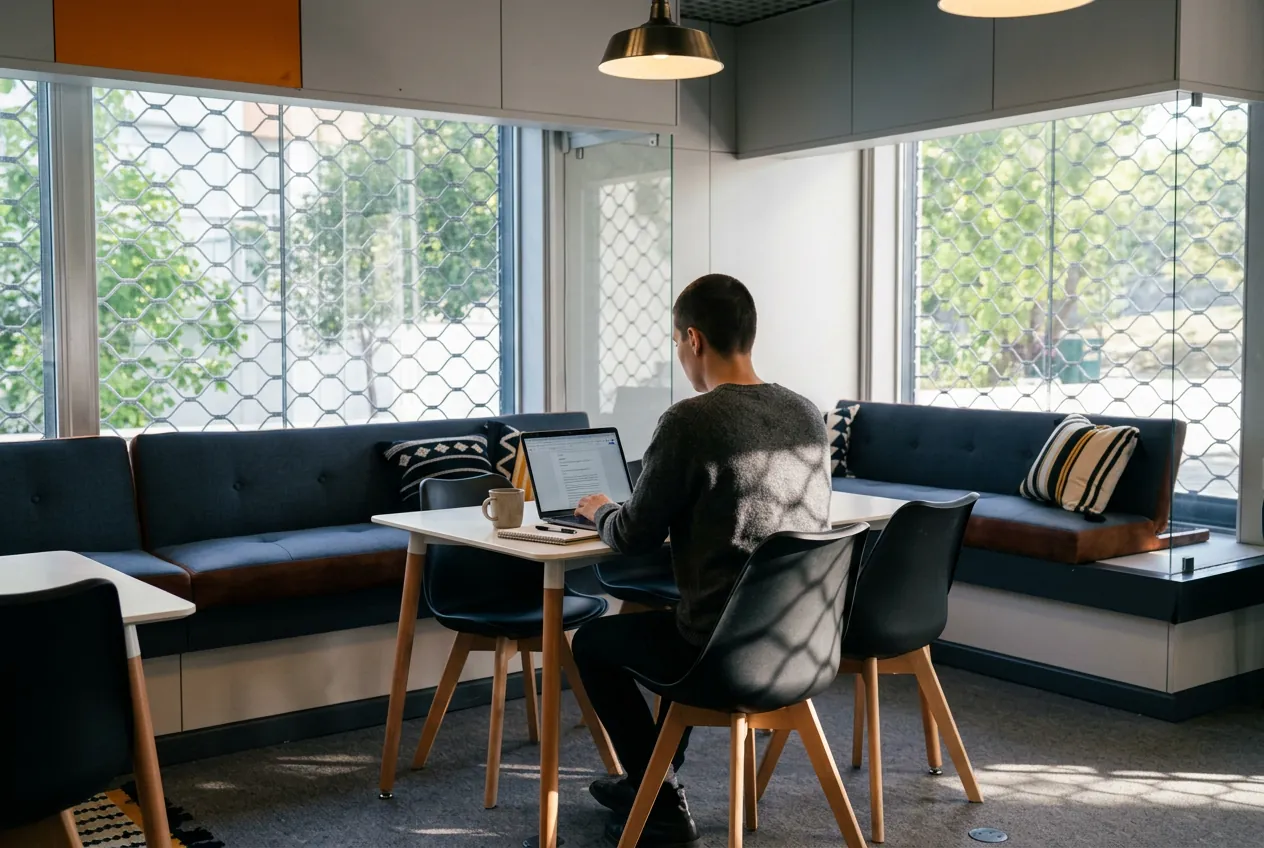
If your clients sit in other time zones, the month pass matters: 24/7 access and your own door code mean a 21:00 call happens at a proper desk with fibre Wi-Fi, not on a sofa with patchy signal. Printing is included too, which helps when a form needs a signature.
A 21:00 call deserves a real desk, not the edge of a bed.
066 / 6Our verdict: settle south of the river
We think the South Bay suits a first stay better than central Lisbon: calmer, closer to the sea, and with the city one crossing away when you want it. Costa da Caparica and Almada give you a long beach, a slower pace and fewer people photographing your breakfast. Arrive in 2027 and you land just as 10cowork v2.0 brings its community of builders, creatives and founders back to life.
Start with a week, then decide. A week pass is €40 and a month €100, plus VAT, with no contract. Read our guide for digital nomads in Costa da Caparica, the cost of living south of Lisbon and remote work in Portugal in winter.
Try the space first. Your first half day is free.
Book a free half day5 questionsFrequently asked questions
Does Portugal have a digital nomad visa?
Portugal has a visa route for remote workers, commonly called the digital nomad or D8 visa. Check the official pages for the current requirements.
What is the income requirement for the Portugal digital nomad visa?
It is set by the government and changes over time. Check the official visa portal and your consulate for the current figure.
Do I need a NIF as a digital nomad in Portugal?
Most people need one for renting, contracts and many everyday services. Check how to get it on the Portal das Finanças.
Can I work from a coworking space on a digital nomad visa?
Generally yes. The visa concerns your remote income and residence, not which desk you use, but check your own visa conditions.
Where can I work remotely in Lisbon's South Bay?
10cowork in Caparica offers day, week and month passes with fibre Wi-Fi, a meeting room and free parking, with no contract.